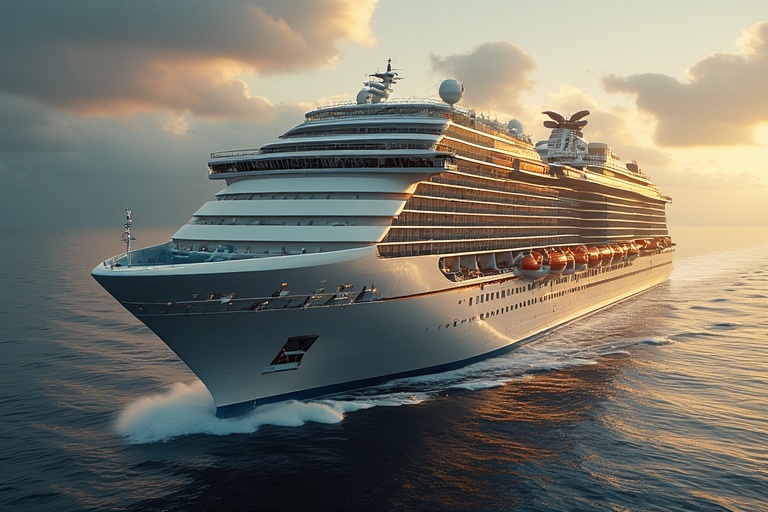
If you’re considering a cruise vacation in 2010, it’s time to take a look at trends and changes that may affect the destination and ship you choose and how much you’ll pay. Here are five important trends to to help you find a terrific deal on the ship and cruising region of your dreams.
1. CRUISERS CONTINUE TO BOOK AT THE LAST MINUTE
According to a November, 2009 American Express survey of 405 member travel agents, 79% of customers are waiting until the last minute to book travel as a way of scoring the best deals. As long as the cruise industry continues to steeply drop cruise fares a month or so before departure the public will be conditioned to wait as long as it takes to score a deal.
AMEX travel agents also say that many travelers are choosing more “all-inclusive” types of vacations such as all-inclusive hotels and resorts (seen by 43% of agents) and cruises (seen by 40% of agents)
*** I personally think it’s better to book a cruise four to six months in advance, especially when your heart is set on a balcony cabin or suite. These staterooms sell out first and those who wait may only find inside and outside accommodations available.
*** Always factor in incentives offered by travel agents such as on-board credit, free gratuities and, in some cases, free airfare and shore excursions. Cruise enticements like these can lower the total cost of your cruise significantly.
2. LOWER CRUISE FARES WILL CONTINUE TO BE THE NORM
In its fourth quarter earnings report, Carnival Corporation forecast 2010 fares to be flat or up a bit. An executive of the company, which owns Carnival Cruise Lines, Holland America, Princess, Seabourn, Costa and Cunard, said that while bookings are the strongest they’ve ever had, prices haven’t increased. According to Jeffrey Sherota, Sr. Vice President of Cruises Only, “ in 2010 we’ll see a gradual increase but prices won’t rebound to 2007 levels for a while.”
The cheapest prices continue to be Mexico cruises due to the number of high-capacity ships repositioned to this region and lack of itinerary options. Unless you want to cross the Pacific to Hawaii (five days of sea travel), cruisers must settle on taking 3-, 4- and 7-day voyages along the coast of Mexico. Cheap? We’ve seen a few seven-day Mexico cruises starting at $199 per person, double occupancy.
3. FEWER SHIPS IN ALASKA
Alaska cruising has changed more than any other popular destination. While for years the average annual increase in passengers was a healthy 12%, the number of cruisers dropped significantly last year. Much of it was price related: not only are airfare and shore excursion very pricey, but Canada levied a $50 per person tax. Last year, cruise lines began pulling ships from this region or basing them in Seattle for the season because airfare is lower. With fewer ships you’ll likely find prices a bit higher in 2010, but there will still be lots of bargains.
According to the Anchorage Daily News, “the cruise industry — the biggest player in Alaska tourism — is sending fewer ships to Alaska next year due to the taxes and environmental restrictions approved by voters three years ago. That will mean roughly 140,000 fewer cruise ship passengers for Alaska.” Last summer you could get a one-week Alaska cruise for fares starting around $350 but rates may be higher in 2010 because of decreased capacity. Your best option is to pick a ship sailing round-trip from Seattle because flights are more convenient and less expensive.
4. NEW LARGE SHIPS ADD TO CAPACITY
According to Micky Arison who heads Carnival Corp., in 2010 capacity in the Caribbean will increase by double digit numbers due to the influx of new mega liners such as Carnival Dream and RCI’s Oasis of the Seas plus a steady steam of enormous new vessels entering service during the next 12 months.
In 2010 we’ll continue to see brand new mega ships enter service. Norwegian Cruise Line debuts the 153,000 ton Norwegian Epic, Celebrity Cruises introduces Celebrity Equinox (an identical sister ship of Solstice) and Royal Caribbean continues to trump all its competitors by welcoming Oasis of the Seas‘ sister ship, the 6200 passenger Allure of the Seas.
Other new ships are Holland America’s 86,600 ton Nieuw Amsterdam, sister ship of Eurodam, MSC Cruises’ 93,300 ton MSC Magnifica and Cunard Line’s brand new Queen Mary at 92,000 tons.
Fortunately there are still a few small ships entering service, including the 450-passenger Seabourrn Sojourn, which joins the ultra luxury fleet of the Yachts of Seabourn. American Cruise Lines, which specializes in small ship cruising off the beaten path welcomes two new vessels,
104-passenger Independence and the 210-passenger Pearl Mist.
*** 5. WILD CARD: AIRLINE FARES AND CAPACITY
When I flew to Fort Lauderdale to board Oasis of the Seas last November the airport was mobbed already thanks to the addition of a 6,200-passenger ship. Will this airport be able to handle another influx of passengers when sister ship Allure of the Seas starts sailing from the same home port this year? And, will consumers decide they don’t want to fly to take a ship because air travel is too much of a hassle after Christmas Day terrorist incident and subsequent new security measures?
In the end, it’s airfare prices that will determine whether many people can afford a cruise this year. Airlines cut capacity in order to keep fares as high as possible and this can make or break cruises departing from major cruise home ports like Florida.